The new Sodom and Gomorrah?
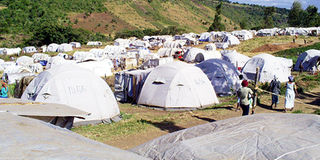
The squalid conditions in which the refugees live pose a huge risk to the social development of children, many of whom are forced to share the little space they have with their parents and, in some cases, even with total strangers.
What you need to know:
- Lack of privacy within internal refugee camps is turning resident children into decadent imps
- The young here record everything their parents do, then re-enact the same with their peers during play time. Urged on by their childish innocence, these children are teetering on the edge of a moral dilemma beyond imagination
In 2007, Angel Kimani was a happily married mother of two, living comfortably in a two-bedroom house in the outskirts of Eldoret town. She had seen her children grow from meddlesome toddlers to disciplined youngsters who toed the Christian line she had weaned them on. She had every reason to believe that her children would grow up to become shining beacons of excellence.
Then in December that year, Kenya went to the polls — and, soon after, to the dogs. As the political chieftains quarrelled in Nairobi over who had won the elections, Ms Kimani’s neighbours, people with whom she had co-existed peacefully, suddenly rediscovered a primitive, tribal militancy that had been hidden in their chests for decades.
And when a gang of agitated youths knocked on her door that dreary January morning in 2008, she knew that she had to pack up and leave her comfortable abode or risk rape, plunder, and murder.


That is how she found her way — her husband and their two children in tow — into the grubby tent camp of Yamumbi, which was set up to house the internally displaced victims of the post-election madness of 2007/8.
It is now three years and Ms Kimani has settled down to the humdrum, commonplace emptiness of her humble existence. However, something disturbs her whenever she pulls her wooden stool outside her polythene structure to watch her children play.
“Their little games, even in their innocence, are worrying,” she says. “Their is a lot of sexual expression in the simple things they do.”
And she is right. Scenes of children climbing on each others’ backs, all the while calling each other pet names that are the reserve of lovers, are a common occurrence here.
Ms Kimani says it is disheartening to watch seven-year-olds entwined in a sexual position in broad daylight, and blames it all on the lack of privacy within the tents.
“It’s unfortunate that this is the kind of generation the circumstances in this camp have forced us to bring up,” says Ms Kimani’s neighbour Mary Mwangi. “The only respite is that most of them are still young and do not understand what they are doing, but it is just a matter of time before they grow up, and then there will be no stopping them.”
A tall order
For parents, privacy during intimacy inside the tents is a tall order. As much as some have tried to re-structure their lifestyles to accommodate the inconvenience caused by the turn of events, the effects of alcoholism, a pastime for many here, have torn down the weak barriers that the tents can offer.
“When drunk, some men forget that their children are barely asleep a metre away. Some even reach out for their wives in full view of the children,” says Ms Mwangi.
This, she adds, has led to social friction as women who can’t stand such drunken sexual exposure choose to seek refuge elsewhere to spare their children the shame.
“It’s just a matter of time before all the youngsters are exposed to this sickening decadence,” says the IDPs’ North Rift secretary general, Mr Patrick Muchiri. “Just take your time and watch the kind of games children play out here. You will not believe it.”
Mr Muchiri says even grown up women are victims of the irresponsible behaviour men (and some women) exhibit when drunk. And the short-term solution, he adds, is to keep the young ones away from the tents as much as possible.
Sending children away from the camps has been precipitated by reduced food rations from the government. Therefore, parents cart their offspring off to live with relatives or to eke out a living elsewhere... anywhere.
“Four of my children have been taken in by relatives,” says a woman, only identified herself as Wanjiku, as she cuddles her fifth child, Samuel Mwangi, born in her tent and who turned one year last November 11.
Limited options
Although her other children are likely to miss out on the parental guidance and love she wishes she could offer them, Ms Wanjiku says her options are limited given the circumstances, and that life outside the camp is likely to mould them into better persons.
“I can hardly meet their medical and dietary needs here, leave alone their schooling expenses. We have tried to cope with this strange arrangement for the three years that we have been here, and we hope the situation doesn’t stretch into next year,” she says.
Her neighbour, Ms Anne Wambui, says even those who have partitioned their tents hardly get the privacy a couple needs, especially now that schools have closed and children spend the whole day running in and out of their polythene homes.
Respiratory complications
But life has to go on for the couples here. Mr Muchiri says more than 20 children have been born at the Yamumbi camp alone in the past three years. Four, however, succumbed to respiratory complications while still babies.
The squalid living conditions, Mr Muchiri says, have been made worse by adverse weather conditions that have led to numerous pneumonia- and asthma-related cases.
“People with respiratory disorders require a clean environment, but with these tents serving as bedrooms, sitting rooms, and stores, that is next to impossible here,” he says.
The IDPs want the government to fulfil its promise and speed up the resettlement process. Mr Muchiri they may resort to the courts if the government does not offer them a solution by the end of this week.
The minister for Special Programmes, Ms Esther Murugi, has indicated that the government has put in place structures to ensure that IDPs are resettled by the end of this year.
The deputy provincial commissioner in charge of Eastern Rift Valley, Mr Wanyama Musiambo, has reiterated the government’s commitment to resettling the IDPs, saying the authorities in Nairobi were working on a scheme to ensure that no Kenyan was still living in an IDP camp by the end of this year.
But the end of the year is just two days away and all is quiet in Nairobi. As the year ticks towards a close, the children of Yamumbi edge closer to moral decadence as their parents, scared and scarred into inaction, watch from the cold interiors of their crumbling tents.