The Kenyan church and the gospel of prosperity
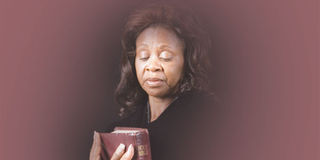
The Kenyan Church is on a roll, but what’s the inspiration behind its colossal growth over the past decade?
What you need to know:
- The Kenyan Church is on a roll, but what’s the inspiration behind its colossal growth over the past decade?
- Occasionally, an issue arises and, with it, many questions and answers that are neither wrong nor right. In such situations, the dapper dauntlessly dare to debate, while the flippant frivolously flirt with the idea. Take, for instance, the question: How did the church in Kenya get so BIG? From the 1970s to date, what was and what is are now worlds apart
GENESIS: In the beginning… Churches were once modest and respected and men of God were held in awe. Church buildings then were broody, stolid, and intimidating structures that made one feel like... God is here.
Those who missed the service would be briefed when their peers got back home and the church mice — priests, deacons, fathers, reverends — were poor, could barely afford a shave, and wore cheap shirts and suits.
EXODUS: The departure… In 2007, the then Attorney General Amos Wako was quoted as saying that Kenya had over 8,000 registered churches and that the office of the registrar of societies received more than 60 applications a month.


At the time of the announcement, more than 6,000 applications were pending.
Quite a big number, that. Which brings us to how the past three decades have seen a transformation in the Kenyan church that is almost biblical. From the structures, leadership, and membership to the way of worship, the changes have been phenomenal.
Church buildings today are warm, exciting, and welcoming structures that make one feel like... a friend is here. On Sunday, those at home can follow the service through Facebook or Twitter or on TV.
The church mouse is today wealthy, debonair, adroitly shaven, and knows that Dolce & Gabbana are not part of the cities of the Decapolis.
There has been a revolutionary explosion within the church in Kenya. The question is, what caused this religious bubble? What changed?
LEVITICUS: Regulations for worship and for priests… Is it the new church approach? Before, people went to church, but now the church has come to the people. In a public bus, a preacher will walk in and preach. In markets and towns, street preachers with black Bibles rule.
In prisons, hospitals, and schools, religious groups visit, doing rounds like guards, nurses, and deputy principals. And today’s church buildings get constructed in people’s backyards.
A reverend leading a nationwide denomination says the period that saw the rise of individual evangelical churches was marked by a change from liturgy and the mystical sacredness of worship as practised by the mainstream (traditional) churches to free, flexible, and open forms of worship.
With freedom, church leaders also changed. Pastors are no longer insipid and enigmatic. These days they wear charisma and flair on their sleeves and are more grandiloquent than politicians. Also gone is their insular nature and in its place is an emancipated man of God. Suave, debonair, and well versed in any issue under the sun. Most of them are young and well educated.
They brought life and technology to the pulpit. Music bands and modern musical accompaniments have joined the choir. Some people attend the service with their iPads instead of the Bible, and some of those without iPads still do not carry the Bible since 56-inch flatscreen TVs mounted on every wall will show Bible readings and lyrics to the songs. Even the hymn book is losing out.
These new church pastors are liberal and do not just make arbitrary decisions on behalf of the church. They consult the congregation through discussions and meetings. They give out questionnaires; What would you want changed in the Sunday service? Which visiting preacher should we invite for the Supper Sunday?
The new church is a 24/7 affair with gatemen, receptionists, administrators, and pastors at their desks from 8am to 5pm. Sunday best just lost its meaning.
NUMBERS: The church census and persistent care for his people… Or is it people’s needs? In a 40-million constitutionally secular country that has an 83 per cent Christian population, the figures grossly increased from the 21.4 million 1989 national total head count with a probably much less Christian percentage.
Development over the past two decades has seen peoples’ problems mutate. People seek answers, they go to God, and thus churches in Kenya have learnt to meet each person at their point of need.
There are services for different age groups and gender. Baby Dedication — where children are put before God. Sunday School — where children are told about God. Teen Ministry — where teenagers question themselves before God.
Youth Ministry — where rebellion against the society and God is guided. Women’s Ministry — for peace at home and with God. Men’s Ministry — for peace everywhere and with God. Family Sundays — for everyone in the house plus God.
Hospital Ministry — for the sick in need of God. Golden Age Ministry — for those who are 50+ years and about to meet God. Requiem Mass — where the body is brought before God.
It is not about scripture, songs, and offerings alone anymore; services today have sessions for career advice and relationships and marriage counselling, among other services. Upcoming events at one of the Nairobi Pentecostal Church (NPC) branches in the city include a Valentine’s dinner for married couples this Friday and premarital classes for the not-yet-married thereafter.
NPC is not alone; Mavuno Church has Ndoa — a 10-week interactive and experiential marriage course that takes place every January, May, and September, while the Catholic Church has programmes for orphans and widows. Pray, who is left out?
DEUTERONOMY: Commandments, laws, rules… Could it be that the message changed? God has stayed true, the Bible has remained the same, but something happened to the message.
A senior pastor at one of the evangelical churches in the city who holds a Bachelor of Arts degree in Bible and theology from the East Africa School of Theology asks a simple question; what is good news to you? That, in her view, is what changed. Preaching today is done to meet the needs of the 21st century congregation. “We are a fast-moving society and the message can be adjusted,” she adds.
During a recent Sunday service in the city, one evangelical reverend introduced his main message for the day as “12 secrets to an effective prayer life”. One of the points under this was “creative miracles”. He went on to expound: “Imagine what you want. Call things which are NOT as though they ARE. In your prayer, prophesy to dry bones.”
It sounded like Your Best Life Now by Joel Osteen. Or The Secret to True Happiness by Joyce Meyer. Or, odd as it may sound, The Seven Habits of Highly Effective People by Stephen R. Covey. That is how the message changed (or did not change), to put more emphasis on secular and social issues.
After four years at St Paul’s University taking a Bachelors of Divinity and five years as a Methodist preacher, Reverend David Manyera is convinced that nothing has changed in the message. In his view, it is the mode and medium of delivery that changed.
“These days you may use secular issues as an opportunity to pass the message,” he says. They call it accommodation, enculturation and, at times, Christianisation of African ideologies.
But there is an elephant in the Christian room. And that elephant is called “Prosperity Gospel”.
“Give and it will be given to you. A good measure, pressed down, shaken together, and running over will be poured into your lap. For with the measure you use, it will be measured to you,” reads Luke 6:38. Well, let us just call it... the elephant in the room.
MARK: 10: 14. Let the children come to me, and do not stop them.” Reverend Jean Bosco, Youth Minister at NPC Ngong, calls it the “Youth Wave”. They are the largest demographic in the nation’s population and the past few decades have seen them rise to be the largest group of churchgoers. The youth found religion, and religion found change.
When they walked in, they introduced Youth Ministry, changed worship into an exciting and lively session, changed the Sunday dress code to trendy and liberal, changed the choir to include gospel rap artistes, transformed the message to a more social and secular-conscious one, changed church leadership to a youthful bunch, and, finally, brought Sheng, the language of the streets, into the church, making it now dine with elders. Faced with this youth wave, the church had to give or get swept away.
A minister at Deliverance Church who works with the youth says: “The youth have a major stake in the church today; you just have to guide them so that they do not go to the extremes.”
Reverend Bosco is more expressive: “The youth are the target, they are the church of tomorrow and any church seeking longevity must court them... or die.”
MATHEW 9:26. The news spread all over… Is it the media? Information is power. Churches know this too well and, over the past few decades, have invested in spreading the Word through various mediums.
Kenya has more than 10 gospel radio stations, including Hope FM, Neema FM, Jesus is Lord, Family Radio, and a number of gospel TV stations like Family TV, Sayare TV, and GBS TV. Secular TV channels and radio stations also have gospel shows on specific days and hours of the week.
Christian publishing houses have also seen the entry of WordAlive Publishers, Evangel Publishers, and Pauline’s Publishers, among others, that publish religious books, magazines, and journals. The Catholic Church even owns a newspaper, The Mirror.
For the religious institutions that do not own media outlets, coverage is paid for on secular channels, with TV stations charging as much as Sh150,000 plus 16 per cent VAT for a 30-minute programme. Newspapers charge much more. And those are not the only means. Churches today have communication departments.
LUKE: 2: 13-14 An army of heaven’s angels singing praises to God… Is it the gospel artistes? Someone broke all the rules of gospel music. No one knows whether it was the 1990s Gospel Gangstaz with their Gangsta Affiliated track or Kirk Franklin with Declaration or DC Talk (the gospel rock band) with the track Jesus Freak, but the fever caught on in Kenya.
Think of Juliani’s mad rap lyrics, MOG the gospel club-bangers, Daddy Owen with Sytem ya Kapungala, Jimmy Gait with his skinny jeans and crazy dancing... the list is endless.
Gospel songs and artistes do not look like gospel songs and artistes anymore. They are lively, carefree, and with little restraint. Even the Esther Wahomes and Rose Muhandos have not been left behind. Everything about gospel music today is new.
The songs are easy, the language is Sheng, the performance is heated, the videos are flashy, and the marketing aggressive.
Boiux Maoimbi, the Eagles Christian Church soloist, says that singing has become flexible with time, and that churches are not tied to hymns and old songs anymore. Composers of new gospel songs, even within the church, do not have to go through the church’s administration for vetting. They just compose and the group sings.
LUKE: 19: 11-26 The Parable of the Gold Coins… Is it the money and business by the church? There is a fallacy that churches were once poor. No, not in the days of the Pharisees or those of Jesus.
Jesus had a treasurer (Judas Iscariot) who carried the money bag and would help himself (steal) once in a while, but they never ran out of funds. The church has never been poor. It has been modest. Now, it is not.
The financial growth of churches in Kenya has been conspicuous. Church buildings are landmarks; huge and of unique designs. The sound systems and technological devices in churches cost a fortune and churches have a wage-earning permanent staff.
The word is spread all over the country, personnel, distance, and cost not withstanding. Televangelists can afford wicked TV airtime costs and most leaders of churches drive expensive and big cars (seen) and live in large palatial homes (heard).
How come? The Church got showy, that is one. Two, there is an entrepreneurial wing in most churches. From the mainstream outlets to the new evangelical churches, the church organogramme includes a finance department and a board of trustees whose duties are to take care of church assets and the business interests and liabilities of the ministry.
Known church business enterprises include bookshops, catering services, general shops, transport, guest houses, learning institutions (from baby care to universities), health centres, media investments, real estate investments, sacco investments, insurance companies, and, wait for it… a bank.
Two senior pastors and a reverend concur that business is good. It creates employment, they say, offers cheap services, utilises talent within the congregation and, more importantly, enhances the spreading of the word.
They also agree on how it should be conducted. Divorce the church from the business venture. Let the church provide the capital, but the rest is to be done by a carefully selected team of investment professionals. To add to this, a system of checks and balances should be put in place to monitor this team.
“You don’t want to be caught having kept your gold coin under a rock,” They argue. Is it service or enterprise? You judge.
Do you agree? Send your comments to [email protected]