Azimio MPs: Saving Linturi has put Parliament to shame Seven out of 11 members of the special committee handling ouster motion said CS was not culpable in the fake festiliser scandal.
How Trump would crack down on US immigration in a second term Trump has promised to crack down on illegal immigration and restrict legal immigration if elected to a second four-year term in the White House.
‘Ghost schools’ probe kicks off as MP denies playing a role Baringo North lawmaker has denied any knowledge of the schools
When your child's speech delay is a red flag It is normal for toddlers to express their frustrations through tantrums, especially because they may not be able to express their emotions well
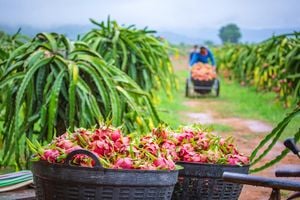
PREMIUM Dragon fruit farmers reap prosperity After 13 years of toiling on a dragon fruit farm, Moses Muguna embarked on his own journey of cultivating this exotic fruit on a larger scale.
PREMIUM How I discovered my son had autism When King A was seven, Jaki took him to New York for the Son-Rise Programme, a forum for children with autism.
PREMIUM Why we can't let go our old cars yet they're costly to maintain For car owners, it is the memories the cars hold that have made it hard to let go of them.
Navigating Long-Distance Relationships Through candid conversations and empathetic insights, from their guest; Namasaka, Macharia, and Nyandoro shed light on the unique dynamics of long-distance love, empowering listeners to embrace...
Why men hate therapy Despite the increasing awareness of mental health issues, there remains a significant stigma attached to therapy, particularly among men.
More Kenyans seeking surgery to lose weight Dr Mayabi shares the process patient go through including nutritional review and why weight loss is not always a cosmetic procedure
Uganda in talks with China's Sinohydro over power line to South Sudan Uganda in talks with China's Sinohydro over power line to South Sudan.
PREMIUM Gaitho: Ruto must winnow his Cabinet President Ruto’s retention of tainted officials is in stark contrast to the two predecessors his cheerleaders would dismiss as much weaker.
Azimio MPs: Saving Linturi has put Parliament to shame Seven out of 11 members of the special committee handling ouster motion said CS was not culpable in the fake festiliser scandal.
Bill proposes to give workers 15pc relief on Housing Levy deductions The proposal contained in Finance Bill 2024 would slightly ease workers' burden.
PREMIUM How I discovered my son had autism When King A was seven, Jaki took him to New York for the Son-Rise Programme, a forum for children with autism.
PREMIUM Why we can't let go our old cars yet they're costly to maintain For car owners, it is the memories the cars hold that have made it hard to let go of them.
PREMIUM Dragon fruit farmers reap prosperity After 13 years of toiling on a dragon fruit farm, Moses Muguna embarked on his own journey of cultivating this exotic fruit on a larger scale.
Outcry as top KVF officials join Malkia Strikers bench Sports CS Ababu Namwamba orders NOC-K to convene meeting to discuss the matter.