S Africa will miss AIDS drug roll-out target
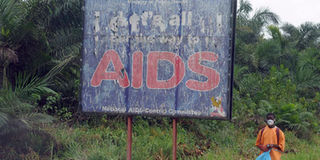
A man stands next to an AIDS billboard as he cleans a street in Yaounde March 20, 2009. REUTERS
PRETORIA, Tuesday (Reuters)
South Africa will not meet a target of providing life-prolonging drugs to 80 percent of HIV/AIDS sufferers by 2011 due to logistical problems and a lack of personnel, Health Minister Aaron Motsoaledi said on Tuesday.
"We are now covering 700,000 people. Unfortunately it is only 50 percent of the number that has been targeted. By 2011, we are supposed to cover 80 percent of the people who need to be on ARVs (anti-retroviral drugs)," Motsoaledi told Reuters.


South Africa, which has one of the world's heaviest HIV caseloads, has been accused by activists of dragging its feet in dealing with the disease which kills an estimated 1,000 people every day. At least 5.7 million people are infected.
Former President Thabo Mbeki drew sharp criticism after coming to power in 1999 when he questioned accepted AIDS science and failed to make life-prolonging ARVs widely available.
The health minister in the Mbeki cabinet, Manto Tshabalala-Msimang, has been lampooned by leading scientists and activists for recommending garlic and beetroot as treatments.
But President Jacob Zuma's appointment of Motsoaledi -- a respected medical doctor and a former provincial minister who served in various portfolios -- has been welcomed.
He has fostered closer ties with leading AIDS activists and NGOs and wants to change the way the disease is treated.
FUNDING SHORTFALL
Motsoaledi says the government's HIV programme has a shortfall of around one billion rand
Already one province has had to reduce the provision of ARVs and unless the budget is supplemented by additional funds, other provinces may run out of money by next month.
"We have discussed it with Treasury, calculated the costs and I have already met international funders. We are waiting and hoping that there is no chance of the actual shortfall happening."
Despite his overstretched budget, Motsoaledi is exploring providing ARVs to patients as soon as they are diagnosed as HIV-positive.
Once transmitted HIV attacks the T-cells and replicates the virus -- making it impossible for the immune system to protect the body from infection and illness. Public hospitals dispense ARVs when HIV deteriorates to AIDS and patients' CD4 or T-cell counts are below 200.
"The issue of ARV provisioning is to make them able to work and live. Waiting for people to go to a CD4 count of 200 is too low too late, maybe we should start them at 350," Motsoaledi said.
South African hospitals are under-funded, lack resources and in some cases in a state of decline. Higher pay and better conditions have seen many doctors and nurses lured overseas.
Motsoaledi says the declining standards can be attributed to the flight of skilled staff.
"Medical and nursing training is of a very high quality in this country but when you start experiencing problems now with shortages of staff, that standard ... will start deteriorating."
The country was also failing to produce enough doctors. It needed at least 9,000 a year but currently only 1,200 doctors graduate annually.
Apart from struggling to provide for its own citizens' -- the influx of political and economic refugees to South Africa -- is putting pressure on the country's overstretched, health, education and social services budgets.
According to the United Nations High Commission for Refugees (UNHCR) in Pretoria, South Africa has 270,000 refugees, the largest number in the world.
Motsoaledi said: "On humanitarian grounds we have no option but to do it. But it does cause a serious strain."