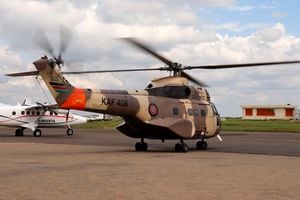
PREMIUM Donations of death? Story of KDF planes, choppers Kenya Air Force has for long depended on its 17 old Scottish Aviation Bulldogs, Embraer Tucanos trainers and 14 BAE System Hawks.
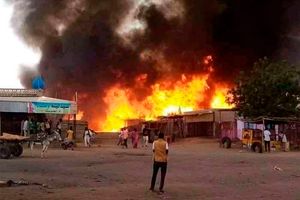
UN warns of possible imminent attack on Sudanese city War erupted in Sudan one year ago between the Sudanese army and the paramilitary Rapid Support Forces.
PREMIUM The thriving Washington State business of 25, 000 Kenyans running Sh700bn empire Kenyans have thrown their gauntlet into the commercial ring of Washington State
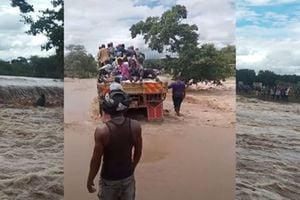
PREMIUM Schools reopen for second term to floods threat, funding crisis The ongoing heavy rains have destroyed roads and schools.
Are you a man and want to take better care of yourself? Get a wife… Consciously aim to be close to your wife because you will do far better in life if you are open and honest with her.
PREMIUM Inside the big Fazul Mohamed - Francis Atwoli tiff rattling Cotu Fazul wrote to private security firms directing them to halt deducting union due and remitting to Cotu.
Mwalimu Andrew: Why we will not open school tomorrow I spent the last two days sending a message across that Mwisho wa Lami Primary School will re-open on Thursday, May 2.
How EA breathes new life into domestic violence survivors In this episode, we explore the achievements Kenya, Uganda, and Tanzania have made in addressing domestic violencE
Why Gen Zs are less interested in clubbing than their Millennial counterparts Explore how Gen Z's values and experiences differ from those of Millennials
Why are more women adopting a more masculine demeanor? Exploring the roles both women and men play in accentuating their partners' masculinity and femininity, respectively.
UN warns of possible imminent attack on Sudanese city War erupted in Sudan one year ago between the Sudanese army and the paramilitary Rapid Support Forces.
PREMIUM Mutua: Kenya’s obsession with ‘Majuu’ I am flummoxed by the slavish, self-denigrating worship by Kenyan visitors to America.
Gachagua: I have a right to know how Nairobi County is run The deputy president says Nairobi City residents deserve better services.
Fake fertiliser: Controversy hits compensation scheme MPs are wondering where government will get money to repay farmers for poor quality farm input.
Mwalimu Andrew: Why we will not open school tomorrow I spent the last two days sending a message across that Mwisho wa Lami Primary School will re-open on Thursday, May 2.
Are you a man and want to take better care of yourself? Get a wife… Consciously aim to be close to your wife because you will do far better in life if you are open and honest with her.
It’s official, every Kenyan family needs a boat… On Monday, I found myself 'marooned' on a flooded pavement along Kenyatta Avenue.
Wanyonyi: World record pushes me to work harder The 19-year-old clocks 3 minutes,54.5 sec to break One Mile record set by Kessler of USA last October.