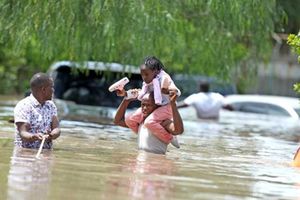
Death and destruction as floods ravage the country More than 10 people feared dead in Nairobi as President Ruto directs the formation of response team.
World Bank suspends Tanzania tourism fund over abuse allegations Two anonymous complainants have accused rangers from the Ruaha National Park of extrajudicial killings.
PREMIUM 'Huku ni dunia ingine': Woman who never left village documents first Nairobi visit Milka Cheyech slept on the third floor of a city hotel, a dizzying height for someone who said she’s used to sleeping “kwa ground”.
'You're fired!': Counties issue dismissal letters to striking doctors Devolved units cite desertion of duty and gross misconduct in dismissal letters.
PREMIUM Knec to pilot first Grade 9 assessment before October The assessment will replace the Kenya Certificate of Primary Education examinations.
PREMIUM KDF chopper crash: Colonel Duncan Keitany's widow speaks out Col Keitany who died in a military helicopter crash shares many similarities with his boss Gen Ogolla.
PREMIUM MPs put KPC on spot over destroyed land sale papers Parliamentary team probes how land worth sh697m was sold at sh7.9m.
Why Gen Zs are less interested in clubbing than their Millennial counterparts Explore how Gen Z's values and experiences differ from those of Millennials
Why are more women adopting a more masculine demeanor? Exploring the roles both women and men play in accentuating their partners' masculinity and femininity, respectively.
Breastfeeding and women’s struggles we don’t speak about In an all female episode, the ladies share stories with host Dr Wangari from breastfeeding in cars to cracked nipples
World Bank suspends Tanzania tourism fund over abuse allegations Two anonymous complainants have accused rangers from the Ruaha National Park of extrajudicial killings.
PREMIUM Onyango-Obbo: Where the invisible citizens hide For the invisible people, the M-Pesa agent might just be the best authority to deliver their IDs.
PREMIUM Inside UDA's 190,000-candidate grassroots elections Five counties, Nairobi, Narok, West Pokot, Busia and Homa Bay to hold drive on Wednesday, April 24.
PREMIUM Audit reveals KRA’s Sh1.7trn in uncollected taxes Taxpayers are staring at about Sh1.7 trillion losses in contentious and uncollected taxes.
PREMIUM Castor oil craze: Is this the elixir of beauty and health? Besides weight loss and easing bloating and menstruation pain, other women are using castor oil for skin and haircare.
PREMIUM 'Huku ni dunia ingine': Woman who never left village documents first Nairobi visit Milka Cheyech slept on the third floor of a city hotel, a dizzying height for someone who said she’s used to sleeping “kwa ground”.
From accountant to insurance salesperson Annflorence Makanga is an Agency Manager at Kenya Orient Life Assurance Limited. She is also an Associate Insurance Institute of Kenya (AIIK) Finalist with the College of Insurance.
Omanyala will be ready for Paris Olympic Games, says coach Kimani Omanyala said there was still time for him to rectify a few things.