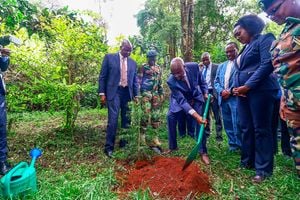
Why Ruto's plan to plant 15bn trees by 2032 is a tall order The country has only managed to plant 750 million tree seedlings since September 2022, well short of the three billion mark.
Chad declares interim president Deby winner of disputed vote Interim President Mahamat Idriss Deby won the May 6 presidential election with over 61 percent of the vote.
PREMIUM From class to menial jobs: Sad tales of teachers who refused to go back to North Eastern ‘People are wondering why degree holders are now boda boda operators, but we must survive.’
PREMIUM Linda Ndung'u: What drives Bolt Kenya boss' career It's the story of Daniel that Linda Ndungu, Country Manager of Bolt, resonates with the most.
Linturi trial: CS mounts defence of his life Defence based on claims of lack of evidence or link between the allegations and his duties.
A day in the life of a 16-year-old girl From the slums to mansions, these girls navigate the delicate balance between honouring their culture and embracing the possibilities of a modern world.
Virginity: We're waiting until marriage despite peer pressure In a world obsessed with fast cash, fast food and fast sex, waiting until marriage seems to be going out of fashion.
Navigating Long-Distance Relationships Through candid conversations and empathetic insights, from their guest; Namasaka, Macharia, and Nyandoro shed light on the unique dynamics of long-distance love, empowering listeners to embrace...
Why men hate therapy Despite the increasing awareness of mental health issues, there remains a significant stigma attached to therapy, particularly among men.
More Kenyans seeking surgery to lose weight Dr Mayabi shares the process patient go through including nutritional review and why weight loss is not always a cosmetic procedure
Chad declares interim president Deby winner of disputed vote Interim President Mahamat Idriss Deby won the May 6 presidential election with over 61 percent of the vote.
Stop boda boda rip-off The government should protect small-scale investors such as boda boda operators so as to grow the economy.
Revealed: Inside Ruto MPs’ plot to ‘finish’ Azimio coalition Sinister plot by President Ruto’s Kenya Kwanza side to make changes to the National Dialogue Committee report.
Millers, farmers locked in sugarcane prices standoff Factories fault the court's decision to keep higher prices terming them unsustainable.
Virginity: We're waiting until marriage despite peer pressure In a world obsessed with fast cash, fast food and fast sex, waiting until marriage seems to be going out of fashion.
PREMIUM Linda Ndung'u: What drives Bolt Kenya boss' career It's the story of Daniel that Linda Ndungu, Country Manager of Bolt, resonates with the most.
Of weird staff and strange behaviours An employee who feels like he is being underpaid can decide to empty the entire till and then vanish into thin air.
PREMIUM Young US-based Kenyan football star nurtures local talent The lanky forward is hoping for a call-up to Major League Soccer in the USA.